
Harlow Greyhound Trial Results: What Trial Times Tell You Before Race Night
 Available in US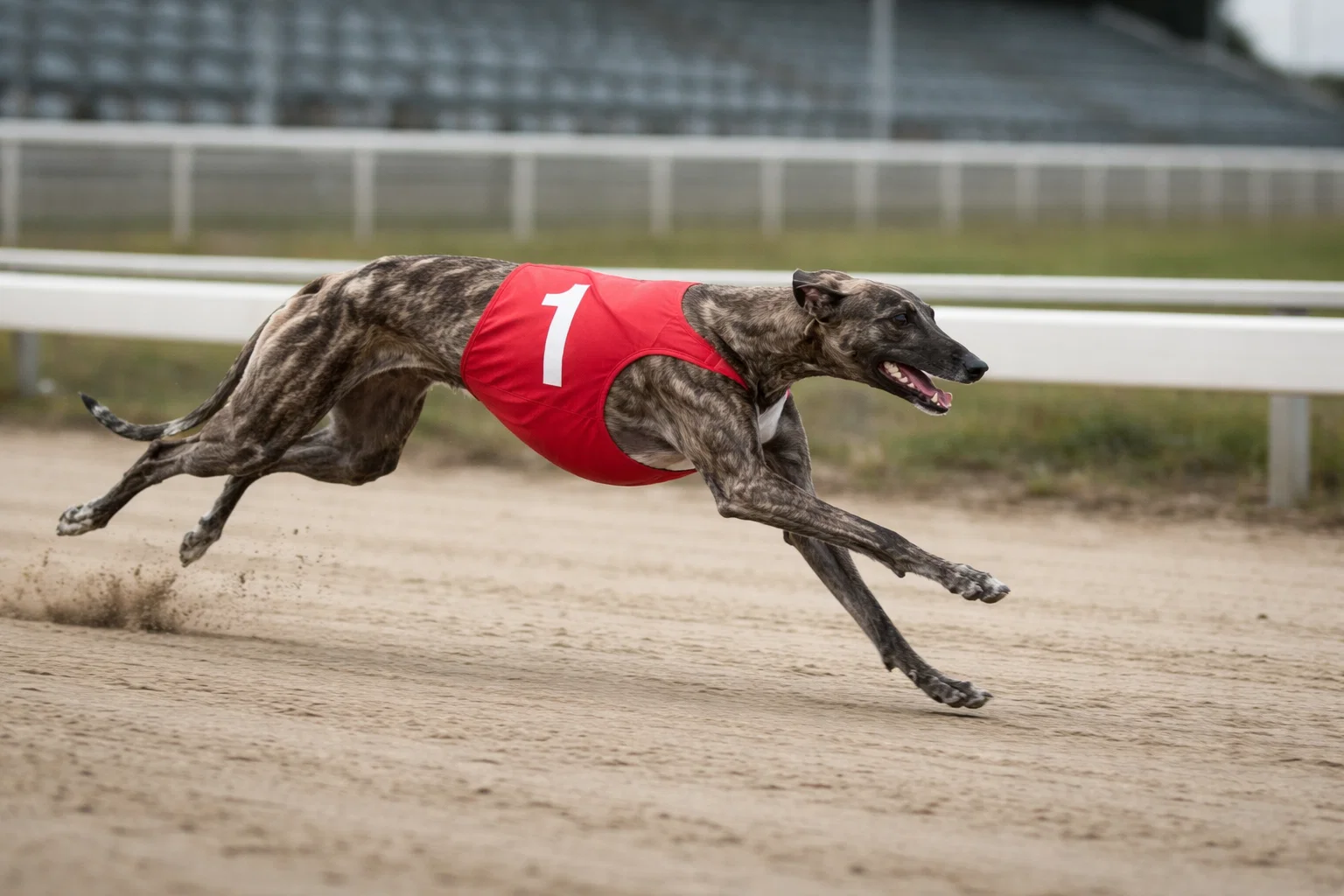
Trials are the dress rehearsal that most punters ignore. I used to ignore them myself until a trainer I respected told me he learns more from a single trial than from three competitive races – because in a trial the dog runs without traffic, without pressure and without excuses. What you see is a clean measure of the dog’s current ability on that specific track surface. At Harlow, trial sessions produce data that feeds directly into grading decisions, debut assessments and comeback evaluations, and knowing how to interpret that data gives you a head start on anyone who waits for the official racecard to form an opinion.
See also: harlow greyhound results — Harlow greyhound tips and results.
What Greyhound Trials Are and When Harlow Runs Them
A trial is a timed solo run or a small-group run – usually two or three dogs – over one of the standard distances at the track. Unlike a competitive race, a trial has no traps draw pressure, no first-bend scramble and no crowding. The dog breaks from its assigned trap, runs the distance, and its time is recorded. That is the entire exercise, and its simplicity is the point.
Harlow schedules trial sessions on non-race days and sometimes before the first race of a meeting. Harlow runs racing on Mondays, Wednesdays and Fridays with morning and evening cards, plus Sunday mornings, which leaves Tuesday, Thursday and Saturday as potential trial days. The exact schedule depends on demand – trainers book trial slots through the stadium – and the availability of track time. Trials are not publicly ticketed events; they are working sessions for trainers, racing managers and the timing team.
Three situations produce trial data at Harlow. First, a new dog being introduced to the track for the first time – every greyhound must complete a satisfactory trial at a track before being eligible to race there, and the trial time becomes the baseline for initial grading. Second, a dog returning from injury or a layoff – the racing manager will require a trial to confirm the dog is fit to race competitively. Third, a dog switching distance – a trainer might trial a dog over 592 metres before entering it for a stayers’ race if its form has been exclusively over 415.
GBGB’s chief executive Mark Bird has spoken about the progress the industry has made in welfare standards, and the trial system is part of that framework – it ensures dogs are physically prepared for competitive racing and gives racing managers an objective measure of fitness before exposing a dog to the demands of a full six-runner field.
Trial Times vs Race Times: Bridging the Gap
Here is the question everyone asks: how do trial times compare to race times? The honest answer is “it depends,” but the patterns are consistent enough to be useful.
Trial times are almost always slower than competitive race times over the same distance at the same track. The gap typically runs between 10 and 30 hundredths of a second (one to three “spots” in form-book language) on Harlow’s 334-metre circuit. The reasons are straightforward: in a trial, the dog has no rivals to chase, no competitive stimulus driving it to maximum effort, and no crowd noise or race-day atmosphere to sharpen its focus. A dog that trials in 26.50 over 415 metres might race in 26.20-26.30 under competitive conditions, and that improvement is entirely normal.
The size of the gap between trial time and expected race time depends on the dog’s temperament. Some greyhounds are “trial lazy” – they run within themselves when there is nothing to chase and only produce their best when other dogs are alongside them. These dogs can trial a full half-second slower than their race best, and their trial data understates their true ability. Other greyhounds are “self-motivated” – they run close to race pace even in a solo trial, and their trial time is a reliable predictor of competitive performance. Over time, trainers know which category their dogs fall into, and a conversation with a trainer – or a history of comparing that trainer’s trial times to subsequent race times – reveals the pattern.
The going allowance applies to trial times just as it does to race times. A trial run on a slow surface will produce a slower raw time, and the calculated time (raw time minus going allowance) is the figure you should compare to race data. I have seen punters dismiss a trial time as “poor” when the raw number was inflated by a heavy going allowance, and the calculated time was actually very competitive. Always convert to calculated time before drawing conclusions.
One important caveat: trial times from Harlow’s 334-metre circuit cannot be directly compared to trial times from tracks with different circumferences. A 415-metre trial at Harlow involves four bends on a tight oval. The same distance at a larger track involves fewer direction changes and different geometric demands. If a dog is trialling at Harlow for the first time after racing elsewhere, compare its trial time to other Harlow trials rather than to its race times from a different circuit.
Using Trial Data for Selections
Trial data is most valuable in three specific scenarios, and in each case the approach is slightly different.
For debut runners – dogs appearing on a Harlow racecard for the first time – the trial time is the only Harlow-specific form you have. The key is to compare the trial time to the average calculated time for the grade in which the dog has been placed. If a debutant trialled in 26.40 over 415 metres and has been graded into A5, where the average winning time is around 26.30, the dog is probably competitive but may need a race or two to find its best. If the same dog trialled in 26.10, it may be undergraded and could win comfortably on debut. The trial-to-grade comparison is a crude tool, but for debut runners it is the best tool available.
Check Harlow morning racing results.
For comeback runners – dogs returning after injury or a break – the trial tells you whether the dog is ready to race at its previous level. Compare the trial time to the dog’s pre-break race times. A comeback trial within 15-20 hundredths of the dog’s previous best is encouraging. A trial more than 30 hundredths off the mark suggests the dog has not fully recovered, and its first race back is likely to be a fitness-building exercise rather than a genuine winning chance.
For distance switchers – dogs trialling at a new distance – the trial time gives you a raw speed figure, but the more important information is the dog’s behaviour during the trial. Did it fade in the closing stages of a 592-metre trial, suggesting stamina limitations? Did it look comfortable and relaxed through the second lap? Trainers often watch trials closely for these behavioural cues, and the decision to enter a dog at a new distance is usually based as much on how the dog looked as on the time it recorded.
The market rarely prices trial data efficiently. Most casual punters do not access trial results, and even those who do often misjudge the trial-to-race gap. A dog that trialled well and debuts at generous odds is a scenario that arises at Harlow several times a month, and identifying these opportunities is one of the quieter edges available in greyhound form study.
