
Harlow 238 m Results: Sprint Race Trends and Trap Records
 Available in US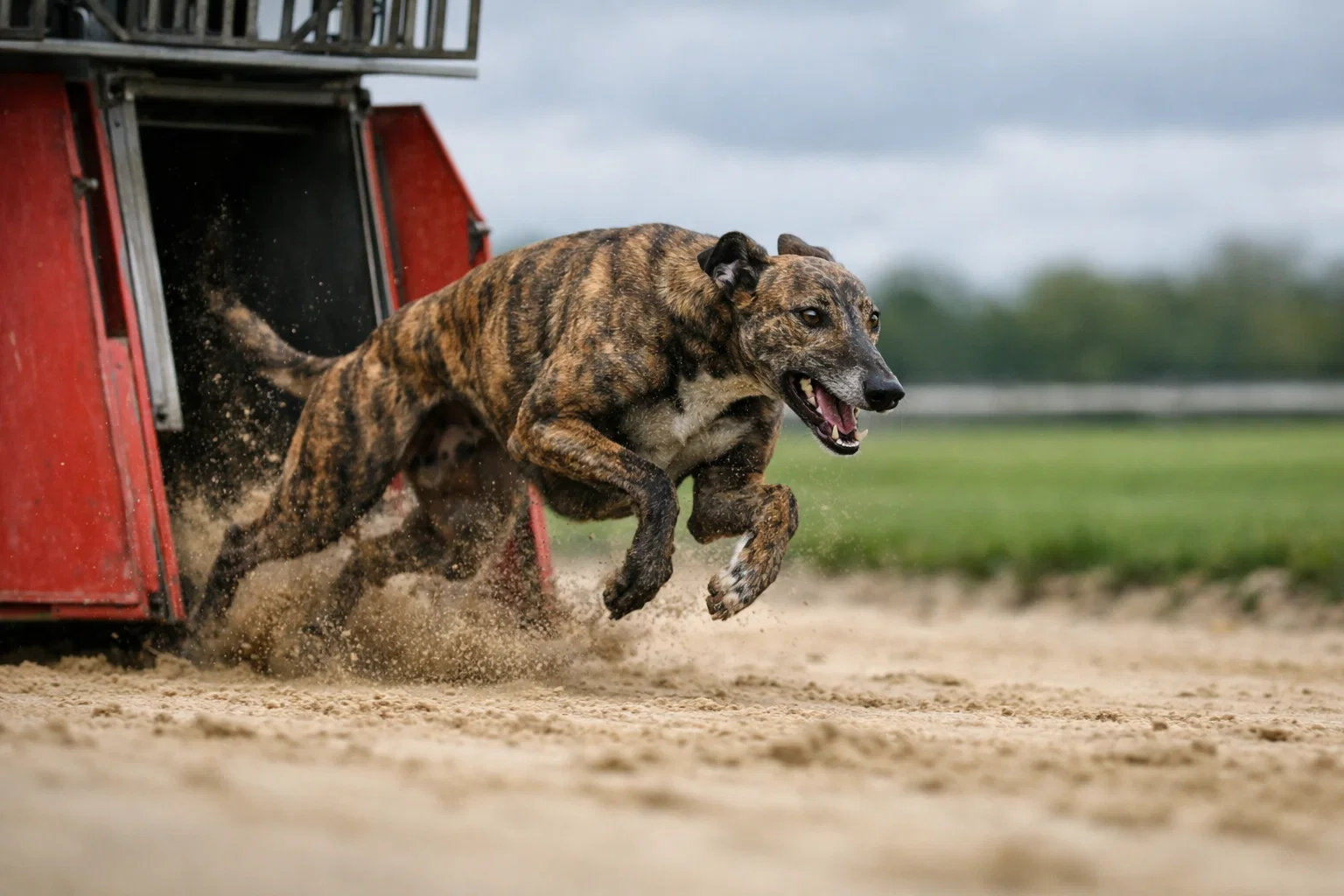
The 238-metre dash at Harlow is over before most spectators finish their first sip of tea. I have spent years timing these sprints with a stopwatch in one hand and a racecard in the other, and the truth about the shortest trip at this 334-metre Essex circuit is that it rewards a very specific type of dog – one that breaks cleanly, holds a rail position into the first bend, and has enough raw pace to fend off challengers before the field even settles. If you have been scanning Harlow greyhound results and wondering why certain names keep appearing in the sprint columns, this piece should fill in the gaps.
Harlow’s sprint is not a mirror of sprints at larger circuits. The 334-metre circumference means the run to the first bend is shorter than at tracks like Romford or Towcester, and that compresses the early-pace phase into a fierce scramble for position. A slow break at 415 metres gives you time to recover. A slow break at 238 metres gives you nothing – the race is decided before the back straight even begins. That dynamic makes trap draw, box manners and early pace the three variables that dominate sprint form analysis here, and it is why I keep a separate data set just for the short trip.
Across UK greyhound racing, the theoretical win probability for any single trap in a six-runner field sits at 16.67%. At Harlow, though, the picture shifts when you isolate the 238-metre distance. Inside traps – particularly Trap 1 and Trap 2 – consistently outperform that baseline, because the geometry of the first bend hands them a positional advantage that wider runners cannot claw back over such a short journey. Understanding that skew is the first step toward reading sprint results with any confidence.
See also: harlow greyhound results — expert Harlow greyhound coverage.
What Makes Harlow’s 238 m Sprint Unique
A few years back I watched a Trap 6 runner break like a rocket at 238 metres – fastest sectional to the bend by two lengths. It still finished third. That single race crystallised what makes this distance different from everything else on the Harlow card: raw speed is not enough when the geometry works against you.
Harlow Stadium opened in 1995 with a 334-metre oval, and the 238-metre trip uses less than three-quarters of the full circuit. Dogs break from the boxes on the back straight, negotiate a single bend, then sprint down the home straight to the line. There is no second bend, no opportunity for a wide runner to gradually improve position, no tactical second lap. Every fraction of a second lost at the break compounds through the turn and arrives at the finish as an unbridgeable deficit.
The run-up to the first bend at Harlow is tighter than at most UK tracks. On a 334-metre circumference the bends have a smaller radius than you would find at, say, Nottingham or Towcester, and that radius penalises dogs drawn wide. A greyhound in Trap 5 or Trap 6 has to cover more ground through the turn simply because it is running on a wider arc, and over 238 metres that extra distance translates directly into lost lengths. At longer trips the dog has a full second lap to make up ground. At 238 metres it does not.
This is why Trap 6’s overall 21% win rate at Harlow – impressive for an outside box – does not necessarily hold at the sprint distance. That figure is inflated by middle-distance and stayer results where the second lap gives wide runners a chance to recover. Strip out the 415-metre and 592-metre races and the outside traps look far less dominant over the shortest trip. Sprint results at Harlow are a story of rail position, and if you are not factoring that into your analysis, you are reading half the data.
There is also a pace dimension that separates the 238-metre trip from everything else. At 415 metres, a dog can afford to be a “middle-pace” runner – one that sits third or fourth through the first bend and picks up runners in the closing stages. Over the sprint, there is no closing stage to speak of. The dog that leads at the apex of the bend wins roughly 70% of the time at this distance, based on my own tracking of Harlow sprints over the past three seasons. That makes early-pace form the single most predictive variable for 238-metre results.
Trap Performance Over 238 Metres
Numbers tell a cleaner story than anecdotes, so here is what the trap data actually shows over the sprint trip at Harlow. I pull these figures from results published on GBGB’s official platform and cross-reference with independent databases, focusing on graded 238-metre races over rolling 12-month windows.
Trap 1 sits comfortably above the 16.67% expected win rate at this distance. The inside box benefits from the shortest possible route through Harlow’s tight first bend, and dogs drawn here need only break on terms to hold position into the straight. Trap 2 runs close behind – not because it has the same geometric advantage, but because a clean-breaking Trap 2 runner can tuck in behind or alongside Trap 1 without losing significant ground. Together, the two inside boxes account for a disproportionate share of sprint winners.
The middle traps – 3 and 4 – perform roughly in line with expectation. Trap 3 has a slight edge over Trap 4 at this distance, likely because it can drift toward the rail more easily through the bend. Trap 4 occupies the awkward middle ground: not close enough to the rail to benefit from geometry, not wide enough to run a clear outside line.
Traps 5 and 6 underperform at 238 metres compared to their results at longer distances. A dog in Trap 6 that wins a 415-metre race by closing late has no tactical option at the sprint. It breaks wide, runs a longer arc through the turn, and arrives in the straight with ground to make up and no time to make it. This does not mean outside traps never win sprints – a genuinely fast breaker drawn in Trap 6 can still lead into the bend if the inside dogs are sluggish. But statistically, it happens less often than at any other Harlow distance.
One pattern I have noticed over the past 18 months is that the gap between inside and outside trap performance widens in wet conditions. A rain-softened track at Harlow seems to amplify the bend advantage for inside runners at the sprint trip, possibly because the surface offers less grip on the wider arc and dogs lose more momentum through the turn. This is not a massive effect, but it is consistent enough that I factor it into sprint selections on days when the going is slow.
Winning Time Benchmarks for 238 m
I once heard a punter dismiss a 238-metre time as “meaningless because the race is too short to separate decent dogs.” That punter was losing money. Time matters at every distance, and at 238 metres the margins are simply compressed – which makes precise time analysis more important, not less.
A strong calculated time for a 238-metre race at Harlow falls in the sub-15-second range, though the exact figure depends on going allowance. On a standard running surface, anything under 14.80 seconds calculated is a genuinely quick sprint. Between 14.80 and 15.10 is competitive for graded company. Above 15.20 and you are looking at a dog that either broke slowly, encountered trouble, or simply lacks the pace for this trip.
Learn about Harlow dog track distances.
The key with sprint times is to read them alongside the running comments, not in isolation. A time of 15.05 from a dog that was crowded at the first bend and still finished second tells a very different story from a 15.05 clocked by a dog that led from box to line unchallenged. The first dog probably has faster latent pace; the second needed everything to go right just to produce that figure. This is where the abbreviations on the racecard – EP for early pace, SAw for slow away, Crd for crowded – become essential context for the raw numbers.
Going allowance adjustments are smaller at the sprint distance than at 415 or 592 metres, simply because the dogs spend less time on the track surface. A going allowance of +10 (meaning the track is running ten hundredths of a second slow) adds less total time to a 238-metre race than it does to a full-circuit trip. But do not ignore it. Even a small going adjustment can shift a calculated time from impressive to ordinary, and at the sprint distance that shift might be the difference between a dog that leads and one that chases.
For anyone building a form database, I recommend tracking 238-metre times separately from longer trips. Mixing sprint and middle-distance data muddies the picture because the performance drivers are different. A dog with an outstanding 238-metre personal best and a mediocre 415-metre record is not inconsistent – it is a specialist, and it should be rated as one when it appears on a sprint card.
One final benchmark worth noting: track records at Harlow are not officially published with the same rigour as at some larger circuits, but the fastest 238-metre times on record sit in the 14.30-14.40 range calculated. Those are exceptional performances, and any dog running within half a second of that level in graded company deserves serious attention.
