
Each-Way Betting on Greyhounds: Place Terms, Rules and Harlow Edge Cases
 Available in US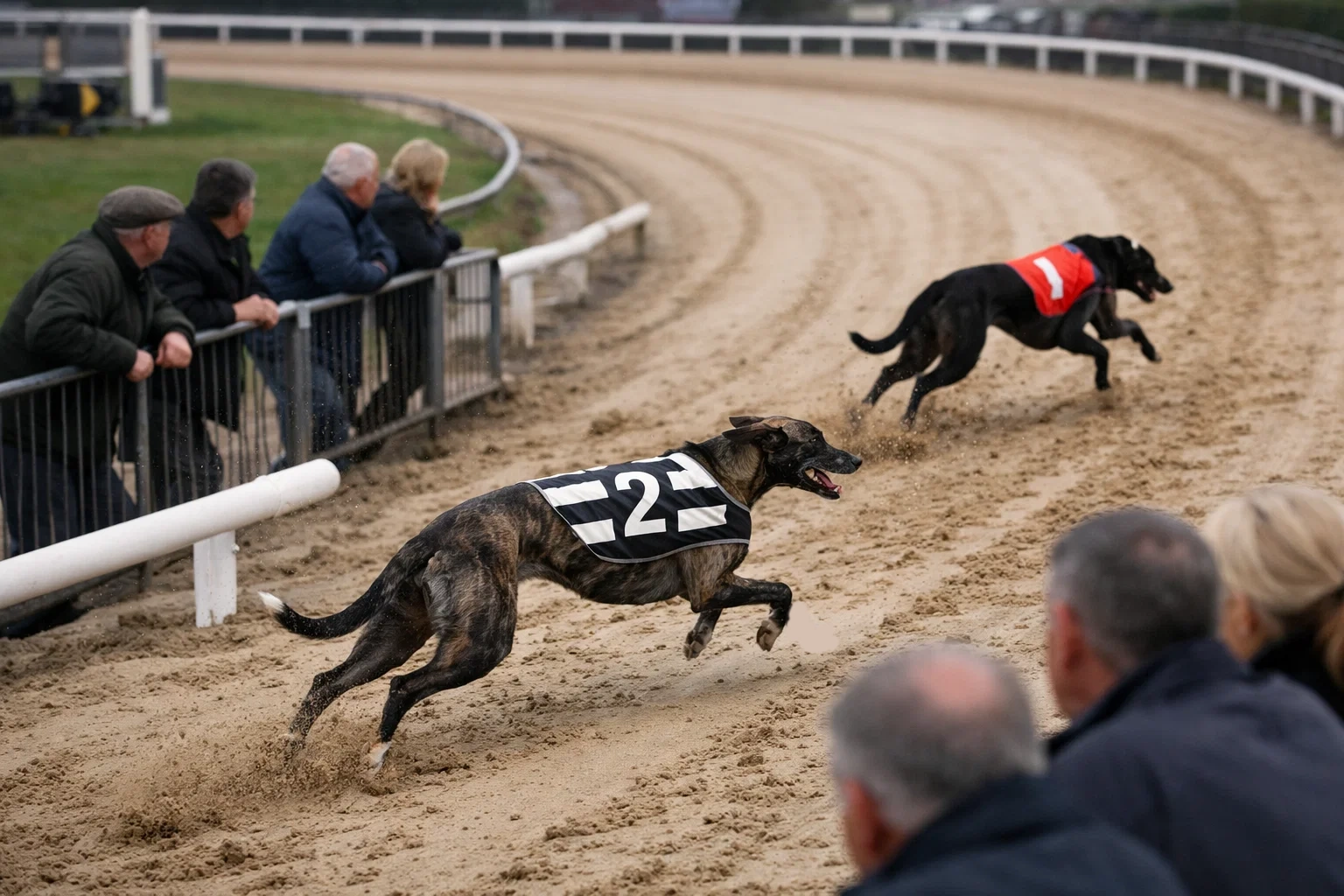
Each-way betting sounds simple until you try to calculate whether it actually offers value. I spent the first couple of years of my greyhound punting career placing each-way bets on instinct – if a dog seemed worth backing but not certain to win, I would add the each-way option and feel clever about hedging my risk. It took a spreadsheet and three months of tracking to show me that each-way is not inherently good or bad; it is a tool that works brilliantly in specific situations and bleeds money quietly in others. This guide explains the mechanics, identifies when each-way offers genuine value at Harlow, and flags the traps – pun intended – that catch out even experienced punters.
See also: harlow greyhound results — your go-to Harlow greyhound site.
Standard Place Terms in Six-Runner Greyhound Fields
Greyhound racing has a quirk that distinguishes it from horse racing: fields are almost always six runners. At Harlow, every graded race is a six-dog affair, and that fixed field size determines the place terms for each-way bets. The standard terms across UK bookmakers for a six-runner greyhound race are 1/4 odds for a place, with places paying first and second.
Here is what that means in practice. An each-way bet is two bets in one: a win bet and a place bet, at equal stakes. If you place a 5-pound each-way bet, your total outlay is 10 pounds – 5 on the dog to win and 5 on the dog to place. If the dog wins, both bets pay: you collect the full win odds on the win portion and 1/4 of the win odds on the place portion. If the dog finishes second, only the place bet pays at 1/4 of the odds, and the win bet is lost.
The average UK favourite in graded greyhound racing wins around 32-35% of the time. At Harlow, that figure edges up to roughly 36%. The relevant question for each-way bettors is not how often the favourite wins, but how often it finishes in the first two. A dog that wins 36% of the time might place – finish first or second – closer to 55-60% of the time, and it is that place strike rate that determines whether the each-way return is positive over a series of bets.
The 1/4 odds place fraction is less generous than the 1/5 you sometimes see in horse racing for larger fields. In a six-dog race, you are being offered reduced odds on a place that covers only two of six runners – a 33.3% probability if all dogs were equal. A dog priced at 4/1 would pay 1/1 on the place leg (4/1 divided by 4), meaning you get your stake back plus an equal amount if it finishes second. At shorter prices the place return shrinks rapidly: a 2/1 shot pays just 1/2 on the place, meaning a 5-pound place bet returns 7.50 – hardly a windfall.
When Each-Way Offers Value at Harlow
Joe Scanlon, Chairman of the British Greyhound Racing Fund, has raised concerns about the overproduction of racing fixtures putting pressure on field quality, and that pressure actually creates opportunities for each-way punters. When fields are competitive and evenly matched, the market spreads, prices lengthen, and the each-way fractions become more attractive.
The sweet spot for each-way value at Harlow is a dog priced between 3/1 and 6/1 that has a strong place record. At 3/1, the place fraction pays 3/4 to a 1-pound stake – enough to generate a modest profit even when the dog finishes second rather than winning. At 6/1, the place pays 6/4 (or 1.50 to 1), which means a placed finish returns a healthy profit on the total 2-unit outlay. Below 3/1, the place return is often too small to cover the lost win stake when the dog finishes second. Above 8/1, the dog’s probability of placing is usually too low to make the place portion reliable, and a straight win bet at bigger odds might be more efficient.
Competitive graded races at Harlow – where the top three in the betting are separated by a point or two in the odds – are natural each-way territory. The market is telling you that multiple dogs have a winning chance, which means the place probability for any mid-priced contender is relatively high. In contrast, races with one dominant favourite and five outsiders are poor each-way propositions: the favourite is too short-priced for the place fraction to offer value, and the outsiders are too unlikely to place.
I also look for each-way value in dogs that have strong place form but limited winning form. A greyhound that has finished second in four of its last six runs at Harlow, always beaten by a length or less, is a serial placer. Backing it to win might be frustrating, but backing it each-way captures the consistent place finishes while leaving open the possibility of a win return when everything falls right. This is not a glamorous approach, but over a season of Harlow meetings it generates a steady trickle of returns that pure win bettors miss.
Common Each-Way Pitfalls and How to Avoid Them
The biggest mistake I see each-way punters make at Harlow – and I made it myself for long enough – is backing odds-on shots each-way. If a dog is priced at 4/6 to win, the each-way place return at 1/4 odds is 1/6. A 10-pound each-way bet (20 pounds total) on an odds-on shot that finishes second returns 10 pounds (stake) plus 1.67 (place profit) = 11.67, which means you have lost 8.33 on the bet. You need the dog to win to make the each-way pay, and if you are confident enough in the dog winning, a straight win bet at 4/6 is more capital-efficient than an each-way where the place leg contributes almost nothing.
Learn about forecast and tricast bets.
Another pitfall is ignoring non-runner adjustments. In greyhound racing, if a dog is withdrawn and a reserve runs in its place, the original place terms still apply – but the odds may shift, and the competitive balance of the race changes. A dog that was 4/1 in a full field might drift to 3/1 with a weak reserve replacing a fancied rival, reducing the each-way place fraction without proportionally increasing the win probability. Always reassess your each-way calculation when the field changes.
The third trap – and this is specific to greyhound racing – is assuming that consistent place form transfers across distances. A dog with a strong place record at 415 metres might have earned that record through stamina that allowed it to close into second. Step that dog down to 238 metres and the shorter trip may not give it time to close, turning a reliable placer into a mid-field finisher. Each-way value depends on the dog placing at the specific distance and at the specific track, and form from other distances should be treated with caution.
Finally, watch your staking. Each-way bets cost double a straight win bet, which means a session of eight each-way bets at 5 pounds each costs 80 pounds. It is remarkably easy to overspend on each-way multiples without realising that the cumulative outlay has exceeded your session budget. I set a separate stake limit for each-way bets and track the total outlay per meeting rather than per bet – it is the only way to keep the each-way habit from eroding the bankroll.
