
Essex and London Greyhound Racing: Active Tracks, Schedules and How Harlow Compares
 Available in US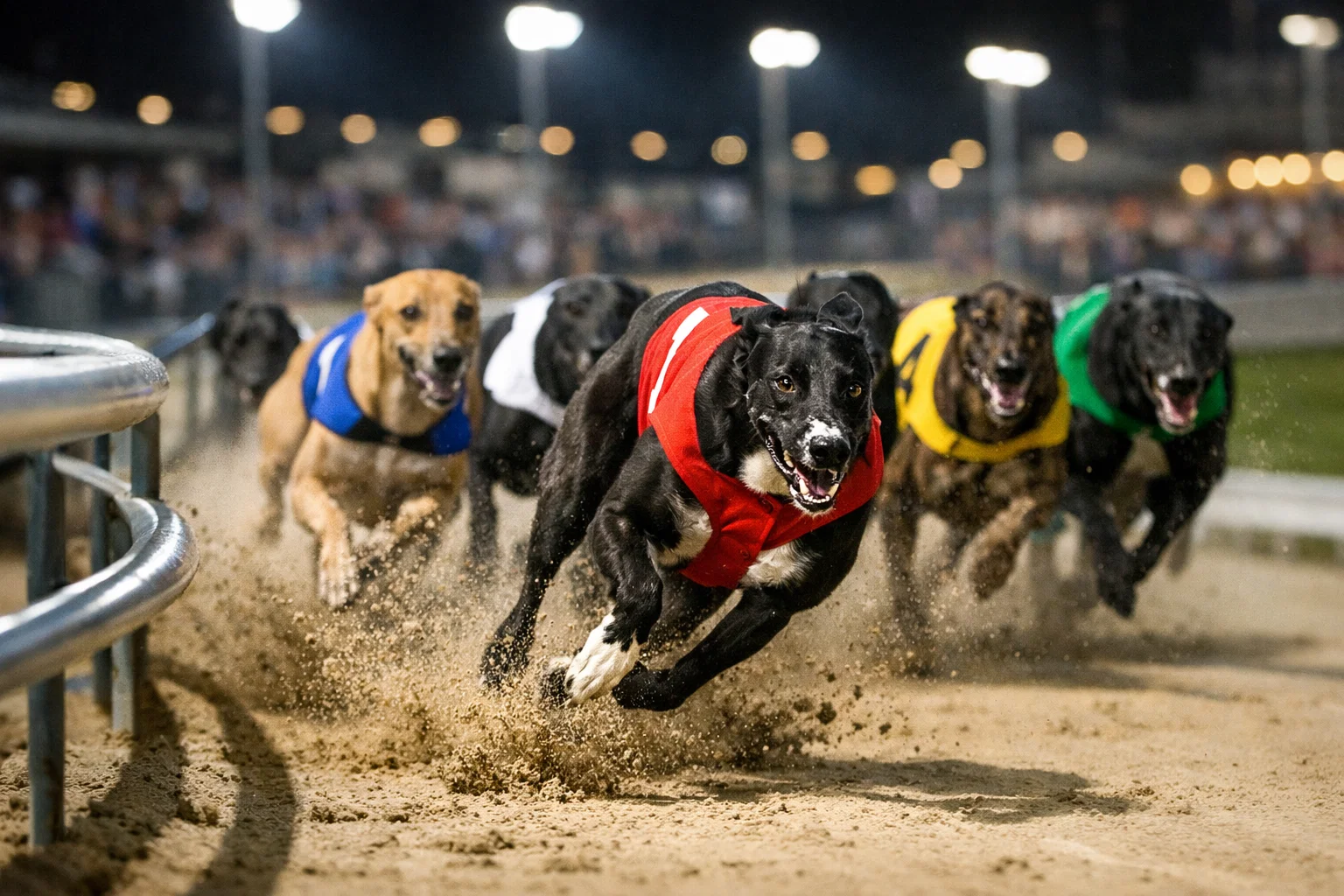
If you live within an hour’s drive of London and want to watch greyhound racing, your options have shrunk dramatically. Crayford closed in January 2025, and the southeast’s racing map now revolves around two GBGB-licensed survivors: Harlow in Essex and Romford in east London. They serve overlapping catchment areas but offer distinctly different racing experiences, and choosing between them – or studying both – requires understanding what each track does well and where they diverge. I have spent enough evenings at both venues to know that the differences are not cosmetic. They shape the form, the betting, and the racing itself.
See also: harlow greyhound results — the Harlow greyhound racing hub.
Active Greyhound Tracks in Essex and Greater London
The southeast of England used to support a dense network of greyhound stadiums. Wimbledon, Catford, Walthamstow, Crayford, Hackney, Romford, Harlow – the list of tracks within reach of London was long enough that a dedicated punter could watch racing every night of the week without repeating a venue. That network has collapsed. Of those tracks, only Romford and Harlow remain operational with GBGB licences. The closures have concentrated the southeast’s racing community into two stadiums that now carry the weight of an entire region’s greyhound culture.
Across the UK, 18 GBGB-licensed stadiums are still operating as of early 2025. Three closed during 2025 alone – Crayford, Perry Barr and Swindon – and Dunstall Park opened as a partial replacement. The contraction has hit the southeast particularly hard because the land values in and around London make greyhound stadiums commercially unviable as pure racing operations. Every surviving track in the London orbit exists because its location, infrastructure or ownership structure has, so far, resisted the pressure to redevelop.
Beyond Harlow and Romford, the nearest GBGB-licensed options for southeast-based punters involve longer journeys – Henlow in Bedfordshire, Yarmouth in Norfolk, or Kinsley in Yorkshire, depending on which direction you are willing to travel. None of these is a practical weeknight alternative for someone based in Essex or east London, which is why Harlow and Romford’s shared dominance of the southeast market matters: if either track closes, the region loses half its remaining access to live greyhound racing.
Harlow vs Romford: Key Differences
The two tracks sit roughly 25 miles apart, but the racing experience at each is shaped by fundamentally different circuit geometry. Harlow’s 334-metre oval is compact, with tight bends and shorter straights. Romford’s 365-metre circuit is more spacious, with slightly wider bends and a longer home straight. That 31-metre difference in circumference translates into a meaningfully different racing product: dogs that excel on Harlow’s tight turns do not always reproduce that form at Romford, and vice versa.
Trap bias is one area where the tracks diverge. At Harlow, Trap 6 has recorded a 21% win rate – well above the 16.67% theoretical baseline and one of the highest outside-box figures in the UK. Romford’s trap data tells a different story, with inside traps holding a more conventional advantage. The likely explanation is geometric: Harlow’s shorter straight before the first bend gives outside runners a shorter distance to cross before establishing position, while Romford’s longer run-up allows inside runners more time to assert rail dominance.
Grading standards differ because grade boundaries are track-specific. An A3 dog at Harlow is not necessarily the same quality as an A3 at Romford – the times that define each grade are set locally based on the track’s own racing data. Punters who follow dogs moving between the two tracks need to adjust their expectations: a dog dropping from A3 to A4 at Romford might still be an A3-equivalent at Harlow, and taking the form at face value without a cross-track calibration is a common mistake.
The racing schedule overlaps but does not duplicate. Harlow races on Mondays, Wednesdays and Fridays (AM and PM) plus Sunday mornings. Romford has its own fixture pattern that includes evening and daytime sessions on different days. There are occasions when both tracks race simultaneously, which splits the betting market and gives punters a choice of card. Following both tracks doubles the workload but also doubles the form data available, and some trainers run dogs at both venues, creating a cross-reference opportunity that single-track punters miss.
Which Track Suits You: Visitor and Punter Perspectives
The visitor experience at Harlow is shaped by its location and facilities. The stadium sits near the M11 with parking for 400 cars and capacity for 1,500 spectators. It is purpose-built, opened in 1995, and the infrastructure reflects a more modern design than the older, converted venues that populated the circuit’s history. Reaching Harlow by public transport is possible but less convenient than by car – the nearest rail station involves a bus connection, and the evening meetings run late enough that return journeys can be awkward for those relying on scheduled services.
Discover the history of Harlow Stadium.
Romford, by contrast, benefits from its urban location. The stadium is within walking distance of Romford station on the Elizabeth line, which makes it significantly more accessible by public transport. The trade-off is parking: space is tighter and the surrounding roads are busier, particularly on evening meeting nights. For someone without a car, Romford is the easier option. For someone driving from Hertfordshire or north Essex, Harlow is quicker to reach.
From a punting perspective, the choice depends on what you value in your form analysis. Harlow’s compact circuit produces more predictable trap bias patterns and rewards dogs with tight-turning ability. Romford’s larger oval produces more varied running styles and gives closers a better chance. If you prefer data-driven, trap-focused analysis, Harlow’s geometry generates cleaner patterns. If you prefer pace-scenario and running-style analysis, Romford’s longer straights and wider bends produce more tactical variety.
Both tracks stream through SIS and are available on all major bookmaker platforms, so the live viewing experience is equivalent for remote punters. The on-course experience differs mainly in atmosphere: Harlow is quieter, more suburban, and less crowded; Romford has a livelier bar, a bigger crowd, and more energy on race nights. Neither track is objectively “better” – they serve different preferences, and the serious southeast punter benefits from knowing both.
