
Harlow Greyhound Results Monday: Meeting Profile and Patterns
 Available in US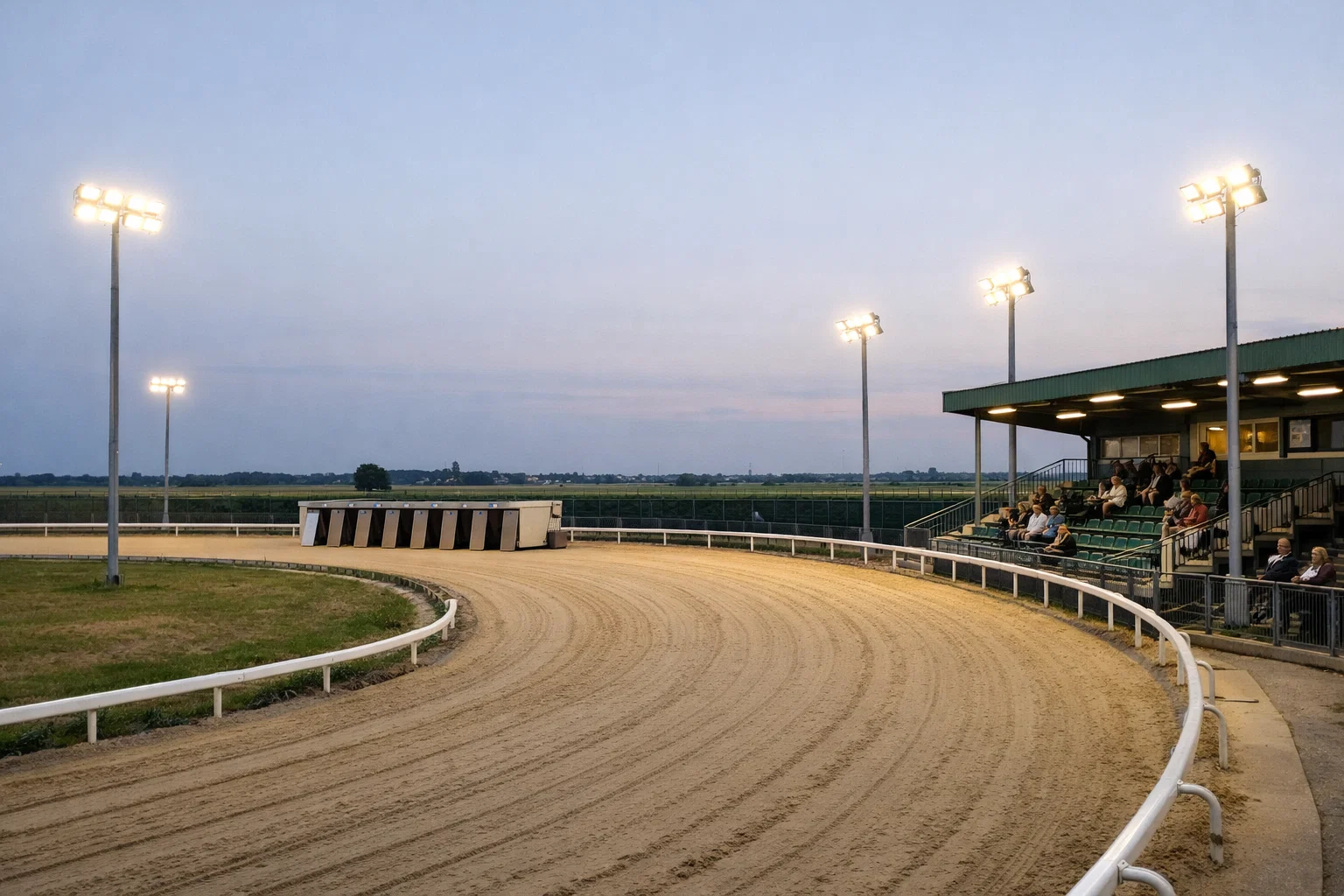
Monday at Harlow has a different feel to it. The stadium is quieter than a Friday evening, the on-course bookmakers have thinner pitches, and the dogs on the card tend to reflect the start of a fresh racing week rather than the tail end of one. I have always found Mondays at Harlow to be a productive betting day – not because the racing is weaker, but because the smaller audience means less money flowing through the market, and less money means softer prices on dogs that an experienced form reader can identify. If you are serious about making Harlow greyhound results work for your betting, Monday is the day to start.
See also: harlow greyhound results — Harlow greyhound racing insights.
What to Expect From a Harlow Monday Meeting
Harlow runs both morning and evening meetings on Mondays, which means there are two separate cards to study. The morning session – typically an 11 a.m. first race – is a BAGS meeting broadcast to bookmaker shops via SIS, and it follows the standard format of ten to twelve graded races over the three available distances. The evening meeting starts later, usually around 7:30 p.m., and carries a similar structure.
The Monday card at Harlow tends to be graded fairly conservatively. Racing managers put together Monday cards from dogs that raced during the previous week’s meetings – Wednesday and Friday results feed directly into Monday grading decisions. This means a dog that won at Harlow on Friday might be regraded upward for Monday, running against faster opposition. Conversely, a dog that finished poorly on Friday might drop a grade and appear on Monday in an easier race. These grading movements are the first thing I check when the Monday card is published, because a freshly regraded dog is either facing tougher competition or easier competition, and that shift creates value in either direction.
Harlow runs races morning and evening on Mondays, Wednesdays and Fridays, plus morning meetings on Sundays. That schedule means Monday is the first full racing day of the week, and the dogs on the card have typically had at least a two-day rest since their last outing. Rest patterns matter: a dog that raced on Friday evening and reappears on Monday morning has had roughly 60 hours between outings, which is adequate for recovery but short enough that any minor soreness from Friday might carry over. I pay attention to dogs that raced hard on Friday – particularly those with “Crd” or “Bmp” in their running comments – and assess whether the short turnaround is likely to affect Monday performance.
Form and Result Patterns on Mondays
Something I noticed years ago and have tracked ever since: the favourite win rate at Harlow Monday meetings is fractionally higher than the midweek average. It is not a dramatic difference, but across a rolling twelve-month sample, Monday favourites convert at about 37-38% compared to the track’s overall 36% rate. That nudge upward likely reflects the grading dynamic – Monday cards are built from the freshest form, and when the grading system is working efficiently, the best dog in the race is more obvious.
Monday mornings also show a slight going-related pattern. The track surface at Harlow is watered and maintained on a regular schedule, and Monday morning is often the first racing session after a weekend rest for the track. In my experience, the Monday morning going tends to be marginally quicker than the Friday evening surface, which has absorbed two sessions of racing already. This is not a universal rule – weather overrides everything – but on a dry weekend with no rain, the Monday morning surface is often at its fastest, and dogs with confirmed early pace benefit from the quicker going.
Trap bias patterns on Mondays do not significantly differ from the overall Harlow data. The same geometry applies regardless of the day, and the 334-metre circuit’s tight bends favour inside runners at sprints and give wider runners more scope at longer distances. Where Monday-specific patterns emerge is in the trainer entries: certain trainers preferentially enter dogs on specific days based on their kennelling schedules, and over time you start to notice which trainers are Monday regulars with their best stock and which save their strongest runners for the larger Friday audience.
Betting Angles Specific to Monday Cards
The reduced betting volume on Monday meetings creates two specific opportunities. First, the early prices offered by bookmakers on Monday cards are often softer than the equivalent race would attract on a Friday. Fewer punters studying the card means less efficient markets, and a dog that would be priced at 3/1 on a busy Friday card might open at 7/2 or 4/1 on a quiet Monday morning. These fractions matter – a 4/1 shot returning 5 pounds to a 1-pound stake is 25% more than a 3/1 shot returning 4 pounds, and those increments compound across a season.
Check the Wednesday results at Harlow.
Second, the grading cycle creates specific value pockets on Mondays. A dog that ran poorly on Friday but has an obvious excuse – crowded at the first bend, drawn in a trap that does not suit its running style, or racing on a going that did not favour its pace profile – will often start at bigger odds on Monday because casual punters see the poor result and walk away. An experienced form reader who spotted the excuse in the running comments and knows the dog is capable of much better can back it at an inflated price. This “bounce-back” angle is the single most productive Monday betting strategy I use at Harlow.
Forecast and tricast markets on Mondays can also deliver value because the pool sizes are smaller. Tote pool dividends depend on the total money in the pool, and a smaller Monday pool means the calculation produces slightly different returns than a larger Friday pool with the same result. This is a marginal effect, but for punters who regularly place forecast bets through the tote rather than at CSF with a bookmaker, Monday pools can occasionally throw up enhanced returns on results that would pay less on busier evenings.
One Monday-specific risk to flag: the morning-evening double card means some dogs appear on both the AM and PM racecard, particularly in lower grades where entries can be thin. A dog racing twice in one day is rare at Harlow but not impossible in trial or non-graded sessions, and a dog that ran a hard morning race and reappears in the evening is likely to underperform. Always cross-reference the morning results before finalising evening selections.
