
Greyhound Trainer Strike Rates: How to Evaluate Trainers Running at Harlow
 Available in US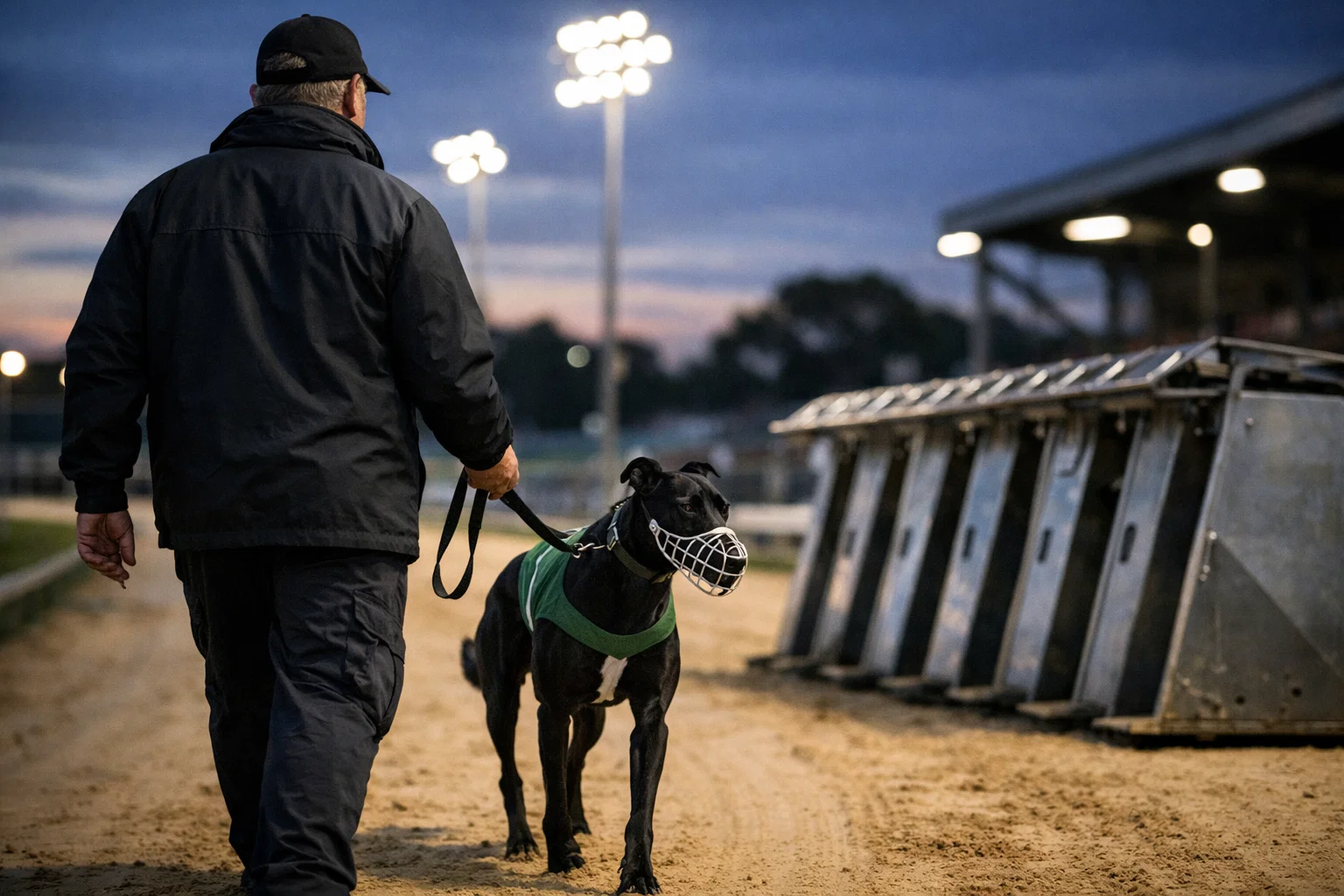
Trainers are the most underweighted variable in greyhound form analysis. Punters pore over trap draws, calculated times, running comments and going allowances, but the name of the trainer on the racecard gets a glance at best. That is a mistake. In 2009, Mark Wallis – a trainer attached to Harlow – trained Kinda Ready to win the English Greyhound Derby, the biggest race in the calendar. That connection was not coincidental. Trainers with high strike rates at specific tracks produce winners at a rate that exceeds what the dogs’ raw form would predict, and understanding why gives you an angle that most punters ignore.
See also: harlow greyhound results — all Harlow greyhound results and tips.
How Strike Rates Are Calculated
A trainer’s strike rate is simply the percentage of runners that win. If a trainer enters 100 dogs at Harlow over a twelve-month period and 20 of them win, the strike rate is 20%. The figure is meaningful only when the sample is large enough to be reliable – a trainer with three runners and two winners has a 67% strike rate, but the sample is too small to draw conclusions. I use a minimum threshold of 50 runners before treating a trainer’s strike rate as analytically useful.
Strike rate alone is not the full picture. A trainer who exclusively runs dogs in low grades will naturally accumulate winners at a higher rate than one who targets the top grades, because lower-grade fields are generally less competitive. The more informative metric is strike rate relative to expectation: does this trainer win more often than the market predicts? If a trainer’s runners are priced at an average SP of 3/1 (implying a 25% win probability) but actually win 30% of the time, the trainer is adding value beyond what the form figures alone would predict. That value might come from superior kennel management, better race selection, or an ability to peak dogs for specific meetings.
At Harlow, where the favourite wins approximately 36% of graded races, the baseline trainer strike rate for a kennel that enters dogs across all grades is roughly 15-18% – because most entries finish out of the first place. A trainer with a consistent strike rate above 20% at Harlow is outperforming, and a trainer above 25% is doing something exceptional with dog placement, fitness management or race selection.
Trainers With the Strongest Records at Harlow
I am not going to name a “best trainer at Harlow” list, because strike rates fluctuate by season, by the quality of dogs in the kennel at any given time, and by the distance mix on the card. What I will describe are the patterns that identify a high-performing Harlow trainer in the data.
The strongest Harlow trainers tend to specialise by distance. A kennel that produces its best results at 238 metres is optimising for a different type of dog than one that targets the 592-metre stayers’ races. This specialisation shows up in the data: a trainer’s strike rate at their preferred distance will be substantially higher than their overall figure. When that trainer enters a dog at their specialist distance, the selection deserves extra weight in the analysis – not because of the trainer’s name, but because the data shows they consistently produce results in that specific scenario.
Kennelling proximity to Harlow also matters. Trainers based in Essex and Hertfordshire – within 30 minutes of the stadium – enter dogs at Harlow more frequently and tend to have better strike rates than visiting trainers from further afield. The advantage is familiarity: local trainers know the track surface, understand how specific bends affect their dogs, and can time their training to peak a dog for Harlow’s meeting schedule. A dog from a local kennel running at its home track has a subtle but persistent edge over a visitor from a distant kennel racing at Harlow for the first time.
The Mark Wallis connection illustrates the principle at a higher level. Wallis’s association with Harlow as his home track meant his dogs were trained with Harlow’s geometry in mind – the tight bends, the short straights, the specific going characteristics. That track-specific preparation translated into results at the highest level, and the same principle applies to every Harlow trainer at every grade: those who train for this track, rather than simply entering dogs at it, produce better outcomes.
Incorporating Trainer Form Into Your Selections
Trainer data should supplement your analysis, not replace it. I use trainer strike rate as a tiebreaker: when two dogs look evenly matched on form, trap draw and pace profile, the one from the trainer with the higher Harlow strike rate gets the nod. This is not a blind rule – if the lower-rated trainer’s dog has clear form advantages, those advantages override the trainer metric. But in the marginal cases where the form book cannot separate two runners, the trainer’s record at the track tips the balance.
Explore Harlow favourite win rate statistics.
Another application is identifying “trainer peaks.” Some trainers at Harlow show seasonal patterns in their strike rates – higher in spring and summer when their kennel facilities are at their best, lower in winter when conditions are more challenging. If a trainer’s strike rate has spiked over the past month compared to their twelve-month average, their dogs may be arriving at the track in better condition than usual, and every entry from that kennel deserves a closer look.
I also track trainer behaviour as a signal. A trainer who typically enters a dog every five days and suddenly enters it after a three-day gap is either pushing the dog or has a specific reason for targeting this meeting. A trainer who has not entered a dog for two weeks and then brings it back for a Friday evening card is likely timing a comeback that they expect to produce a good result. These behavioural signals are softer than raw strike-rate data, but they add texture to the selection process.
Building a trainer database for Harlow takes time but not much effort. Start by recording the trainer name, dog name, date, distance, grade, finishing position and SP for every Harlow card you study. After two or three months, the strike rates will be large enough to be meaningful, and the patterns will start to emerge. Within six months you will have a dataset that most other punters do not possess, and that informational asymmetry is one of the quieter edges available in greyhound form study.
