
UK Greyhound Track Closures: Crayford, Perry Barr and What They Mean for Harlow
 Available in US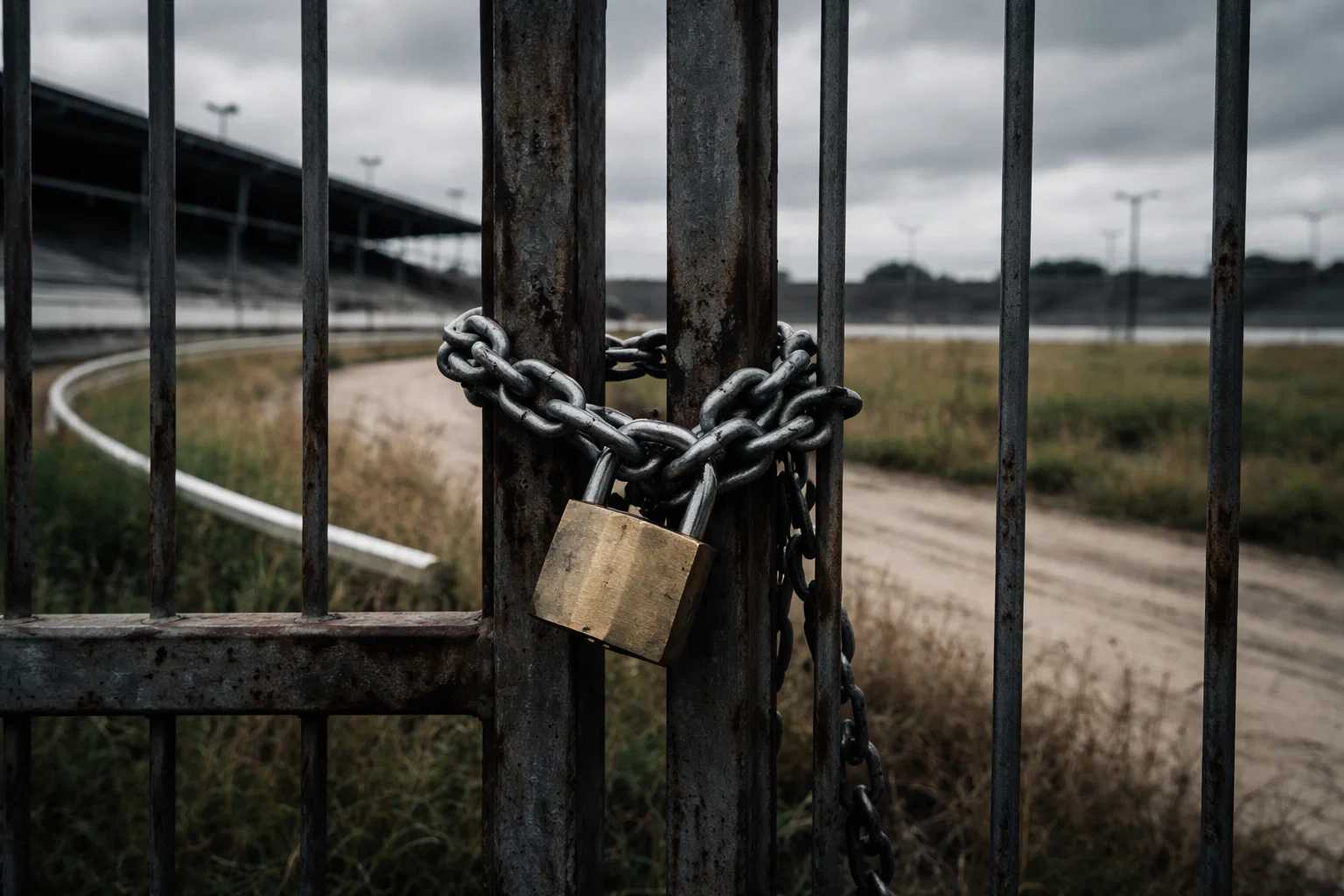
Three tracks went dark in 2025 – Crayford in January, Perry Barr in August, Swindon in December – and each closure sent ripples through the UK greyhound circuit that are still being felt at tracks like Harlow. I was at Crayford for one of its final meetings, and the mood was funereal. The bar was full, the card was competitive, and the closure felt less like the end of a failing business than the eviction of a community. But sentiment does not pay the bills, and the economics that killed Crayford are the same economics that every surviving track, Harlow included, must navigate. Understanding why those three stadiums closed is not historical nostalgia – it is a map of the pressures bearing down on the tracks that remain.
See also: harlow greyhound results — all about Harlow greyhound racing.
Crayford: Why Entain Walked Away
Crayford’s closure was the one that hit the southeast hardest. The track sat in Dartford, Kent, within easy reach of London, and it had been a fixture on the BAGS circuit for decades. Simon Clare, Entain’s UK Communications Director, announced the permanent closure by stating that the company had explored various avenues but the operation was no longer viable.
The viability problem at Crayford was fundamentally about land value versus racing revenue. The stadium occupied a site in a part of London where property development yields multiples of what greyhound racing can generate. Entain, as a listed gambling company with shareholders to answer to, could not justify operating a greyhound track at a loss when the land beneath it was worth far more as housing or commercial space. The decision was rational from a corporate perspective, even if it was devastating for the trainers, staff and punters who relied on the track.
Crayford’s closure removed a significant fixture from the BAGS schedule and left a hole in the southeast racing calendar. Dogs that ran at Crayford needed new homes on the circuit, and trainers that had kennelled within Crayford’s catchment needed new tracks for their entries. Harlow and Romford, the two nearest surviving GBGB-licensed stadiums, absorbed the majority of the displaced entries – which deepened their racing pools but also increased pressure on grading systems that were calibrated for a smaller number of entries.
Perry Barr and Swindon: The Same Story Twice
Perry Barr’s closure in August 2025 followed a familiar trajectory. The Birmingham stadium had been under threat for years, caught between declining racing revenue and escalating site costs. The venue hosted some of the sport’s great moments over its long history, but the economics of maintaining an ageing stadium in a city centre that is being actively redeveloped made the outcome inevitable.
Swindon’s December closure completed a grim hat-trick. The Wiltshire track was smaller and served a more regional audience, but the underlying problem was identical: the gap between operating costs and racing revenue was unsustainable. Unlike Crayford, where land value drove the equation, Swindon’s closure was more about declining attendances and the erosion of the off-course betting market that funds BAGS meetings.
The losses were partially offset by a positive development. Dunstall Park, a new stadium, opened in September 2025 as a replacement for Perry Barr. The new venue was purpose-built with modern infrastructure – a deliberate contrast to Perry Barr’s ageing facilities – and its arrival meant the net loss of GBGB-licensed tracks in 2025 was two rather than three. But Dunstall Park serves the West Midlands, not the southeast or the southwest, and neither Harlow nor Romford benefits directly from its existence.
The broader pattern is unmistakable. The UK operated 77 licensed greyhound tracks at the sport’s 1940s peak. By January 2025, that number had fallen to 18. Each closure removes a fixture from the BAGS rota, redistributes dogs to surviving tracks, and concentrates the sport’s commercial weight onto fewer shoulders. The tracks that survive are not immune to the pressures that killed their neighbours – they are simply managing them better, for now.
What Fewer Tracks Mean for Harlow’s Fixture List and Dog Supply
The contraction of the UK circuit affects Harlow in two tangible ways: fixture allocation and dog supply. Both have implications for the quality of racing and the form analysis that punters rely on.
On the fixture side, fewer tracks means the remaining stadiums are carrying a larger share of the BAGS schedule. If the total number of BAGS meetings required by bookmakers stays constant while the number of tracks decreases, each surviving track must stage more meetings – or the total volume of racing must shrink. At Harlow, the current schedule of six-plus meetings per week is already substantial, and adding further fixtures would strain the track surface, the kennelling pool and the grading system. The alternative – reducing the overall BAGS output – would mean less betting turnover and less revenue for the sport, which creates a circular pressure that nobody in the industry wants to confront.
Read about the greyhound racing ban in Wales and Scotland.
On the supply side, the closure of three tracks in 2025 pushed dogs into the remaining 18 stadiums’ grading pools. GBGB registered 5,899 new greyhounds in 2023, a figure that had already declined 19% since 2019, and the existing population was distributed across a circuit that now has three fewer homes. Harlow’s grading system absorbed some of the displacement, and the effect has been visible in larger entry lists and tighter grading bands. More dogs competing for the same number of race slots means the grading system has to work harder to separate dogs of similar ability, and the result is more competitive fields – which is good for the spectacle but makes form analysis more demanding.
The trainers who relocated from Crayford to Harlow brought with them dogs whose form was built on a different circuit. Crayford’s track geometry, going characteristics and bend radii all differed from Harlow’s 334-metre oval, and dogs that excelled at Crayford do not automatically perform at the same level on a new track. For form students, this means treating former Crayford runners with caution for their first few outings at Harlow – their Crayford times do not translate directly, and their running style may need adjustment for the tighter bends.
The trajectory is clear: fewer tracks, more pressure on survivors, a shrinking dog population, and an industry that must extract more value from a smaller base. Harlow’s position is stronger than most – its infrastructure is modern, its location is commercially sound, and its racing programme is deeply embedded in the BAGS schedule – but strength is relative, and the commercial currents that drowned Crayford, Perry Barr and Swindon have not stopped flowing.
